OCD Therapy in Los Angeles and Online Across California
Exposure and Response Prevention, the treatment with the strongest evidence for OCD.
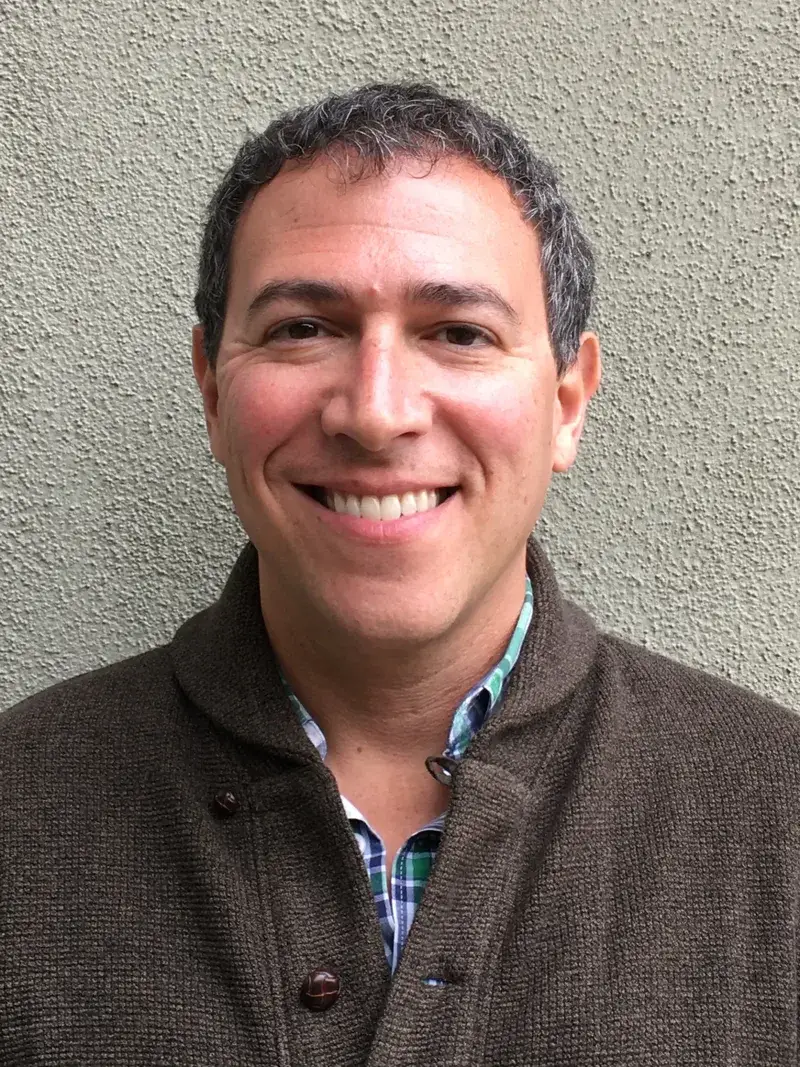
Hi, I'm Jeff. I'm a licensed therapist (MS, LPCC) and I treat OCD with Exposure and Response Prevention, or ERP. A lot of people with OCD spend years in therapy that never quite works, because it treats OCD like general anxiety. ERP is different. It's specific, it's structured, and it's what the research says actually helps.
Book a free 15-minute callNo pressure, no commitment. We'll talk about what's going on and whether I'm the right fit.
Does this sound like you?
- Thoughts show up that you'd never want to have. They're disturbing, they feel like they say something about you, and you can't make them stop.
- You check, wash, count, redo, or mentally review things until they feel "right," and it never stays right for long.
- You ask people you trust for reassurance, over and over, and the relief lasts about ten minutes.
- You avoid certain places, objects, people, or topics because of what they might set off.
- You know it doesn't make sense. Knowing hasn't helped.
- It's costing you time, sleep, relationships, or work, and you're tired.
If your OCD is mostly thoughts and not visible rituals (sometimes called “pure O”), this still applies to you. The compulsions are happening in your head: reviewing, analyzing, neutralizing, trying to figure out if you're a bad person. ERP works on those too.
What Exposure and Response Prevention actually looks like
ERP is a form of cognitive behavioral therapy built specifically for OCD. The name describes what we do.
Exposure means facing the things that trigger the obsessive thoughts, gradually and on purpose. We build a list together, from the easiest to the hardest, and we start where you can start.
Response prevention means not doing the compulsion afterward. Not checking, not washing, not asking, not mentally reviewing. Sitting with the discomfort instead.
That sounds unpleasant, and at first it is. But something predictable happens: the anxiety comes down on its own, without the ritual. Your brain learns that the feared outcome doesn't arrive, or that you can handle the uncertainty. Each time, the OCD loses a little of its grip.
I work from a mindfulness-based CBT foundation, so alongside ERP you'll learn how to notice a thought without treating it as a command. That combination is what most people find sustainable long after therapy ends.
What to expect
A free 15-minute phone call. You tell me what's going on. I tell you honestly whether I think I can help. If I'm not the right fit, I'll say so and point you somewhere better.
The first session. We go through your history and map out what OCD looks like for you specifically: the obsessions, the compulsions, the things you've been avoiding. We set goals you actually care about.
The work. Usually weekly at first. We build your exposure hierarchy, start practicing, and adjust as we go. You'll have things to practice between sessions, because that's where most of the change happens.
I won't push you faster than you agree to. ERP only works if you're the one choosing to do it. My job is to make sure each step is one you can take.
Why work with me on OCD
- Licensed Professional Clinical Counselor in California (MS, LPCC #423)
- I've lived with anxiety, panic, and OCD myself. The treatments I use are the ones that worked for me.
- Mindfulness-Based Cognitive Behavioral Therapy
- Trained in Exposure and Response Prevention (ERP) through NOCD Academy
In person in Los Angeles, or online anywhere in California
My office is in Los Feliz, at 4620 Hollywood Blvd, Los Angeles, CA 90027. If you're nearby, we can meet in person.
If you're not, ERP works well over video. I see OCD clients by telehealth across California, including the Bay Area, San Diego, Orange County, and Sacramento. Many exposures actually happen in your own environment anyway, so doing this from home is often an advantage.
Hours are Monday through Friday, 9 AM to 6 PM.
Fees
Sessions are 50 minutes and $250. I offer a sliding scale based on financial need, so if cost is the thing stopping you, ask me about it on the call.
Questions people ask before booking
Does ERP work for OCD?
ERP is the most studied psychological treatment for OCD and is the first-line recommendation in most clinical guidelines. Most people who complete it see a meaningful reduction in symptoms. It isn't magic and it requires effort, but it has a better track record than talk therapy alone for OCD.
Can ERP be done online?
Yes. Telehealth ERP has been shown to work comparably to in-person treatment, and because a lot of your triggers live at home, at work, or on your phone, practicing exposures where they actually happen can be more useful than doing them in an office.
What if my OCD is mostly thoughts, not rituals?
That's still OCD, and ERP still applies. With intrusive-thought OCD, the compulsions are mental: reviewing, reassuring yourself, trying to solve the thought. We treat those the same way, by learning to let the thought sit there without responding to it.
How long does OCD treatment take?
It depends on severity and how much practice you do between sessions. Many people see real change within a few months of consistent weekly work. Some want to continue longer to work on related anxiety or maintain progress. We'll talk about what makes sense for you.
Is ERP the same as CBT?
ERP is a specific type of CBT designed for OCD. General CBT focuses on challenging thoughts. ERP focuses on changing your relationship to the thoughts through direct practice. For OCD, that distinction matters a lot.
Do you take insurance?
I'm a private-pay practice, which is what lets me keep a small caseload and offer a sliding scale. Many clients get part of the cost back through their plan's out-of-network benefits; I provide the paperwork for that each month, and I'm happy to walk you through it on the call.
Do you offer OCD therapy in San Francisco, San Diego, or Orange County?
Yes, by telehealth. I'm licensed throughout California and see clients by video from anywhere in the state.
Do I need a diagnosis first?
No. Part of our first session is figuring out what's going on. If it turns out to be something other than OCD, I'll tell you and we'll adjust.
Book a free 15-minute call
Pick a time below. We'll talk for 15 minutes about what's going on, and you can decide whether you'd like to keep going. No obligation.
Prefer to call or email? (323) 362-6555 · jeff@jeffreybornstein.com