Social Anxiety Therapy in Los Angeles and Online Across California
For when being around people feels like being evaluated.
Hi, I'm Jeff. I'm a licensed therapist (MS, LPCC) and I specialize in anxiety disorders, including social anxiety. If meetings, parties, dates, phone calls, or ordering at a counter leave you rehearsing, sweating, and replaying it for hours afterward, you're not shy and you're not broken. Social anxiety is a specific, well-understood pattern, and it responds well to the right treatment.
Book a free 15-minute callNo pressure, no commitment. We'll talk about what's going on and whether I'm the right fit. (And yes, I know that a phone call is exactly the kind of thing this page is about. Fifteen minutes, I'll do most of the talking, and you can email instead if you'd rather.)
Does this sound like you?
- Before a social situation you rehearse what you'll say. During it you monitor how you're coming across. Afterward you replay it looking for what you did wrong.
- You're sure people can see you blushing, sweating, or shaking, and that they're judging you for it.
- You avoid things: speaking up in meetings, eating in front of others, parties, dating, phone calls, being the center of attention even briefly.
- When you can't avoid, you get through it with "safety behaviors": staying quiet, keeping your hands busy, sticking close to one person, leaving early, having a drink first.
- You know your fear is out of proportion. That knowledge doesn't help in the moment.
- It's shaped your life more than you'd like to admit: the job you didn't apply for, the friendships that stayed shallow, the things you've said no to.
Social anxiety disorder used to be called social phobia. Same thing. Roughly one in ten people deal with it at some point, and most never get treatment. It's very treatable.
How I treat social anxiety
Social anxiety survives on three things: the belief that you're being judged, the attention you pay to yourself instead of the situation, and the avoidance and safety behaviors that keep you from ever finding out you were wrong. Treatment goes after all three.
The thoughts. We identify the specific predictions you're making ("they'll think I'm boring," "I'll go blank," "everyone will notice") and test them. Not by arguing yourself into confidence, but by looking at the evidence and, eventually, by checking.
The attention. Mindfulness training here is very practical. In social situations, anxious attention turns inward, monitoring your voice, your face, your hands. You learn to turn it back out, onto the person in front of you. That alone changes how the interaction goes.
The practice. We build a list of situations, from mildly uncomfortable to genuinely hard, and work through them gradually, dropping the safety behaviors as we go. This is the part that produces lasting change. It's done at your pace and with real preparation. Nobody gets thrown into public speaking in week two.
What to expect
A free 15-minute phone call. You tell me what's going on. I tell you honestly whether I think I can help. If I'm not the right fit, I'll say so and point you somewhere better.
The first session. We map out where the anxiety shows up, what you avoid, what you do to get through, and what you'd do differently if it weren't there. That last question becomes the goal list.
The work. Usually weekly at first. You'll learn the thinking and attention skills in session, then practice them in progressively harder situations between sessions. We debrief each one. Most people notice things loosening within a couple of months.
Why work with me
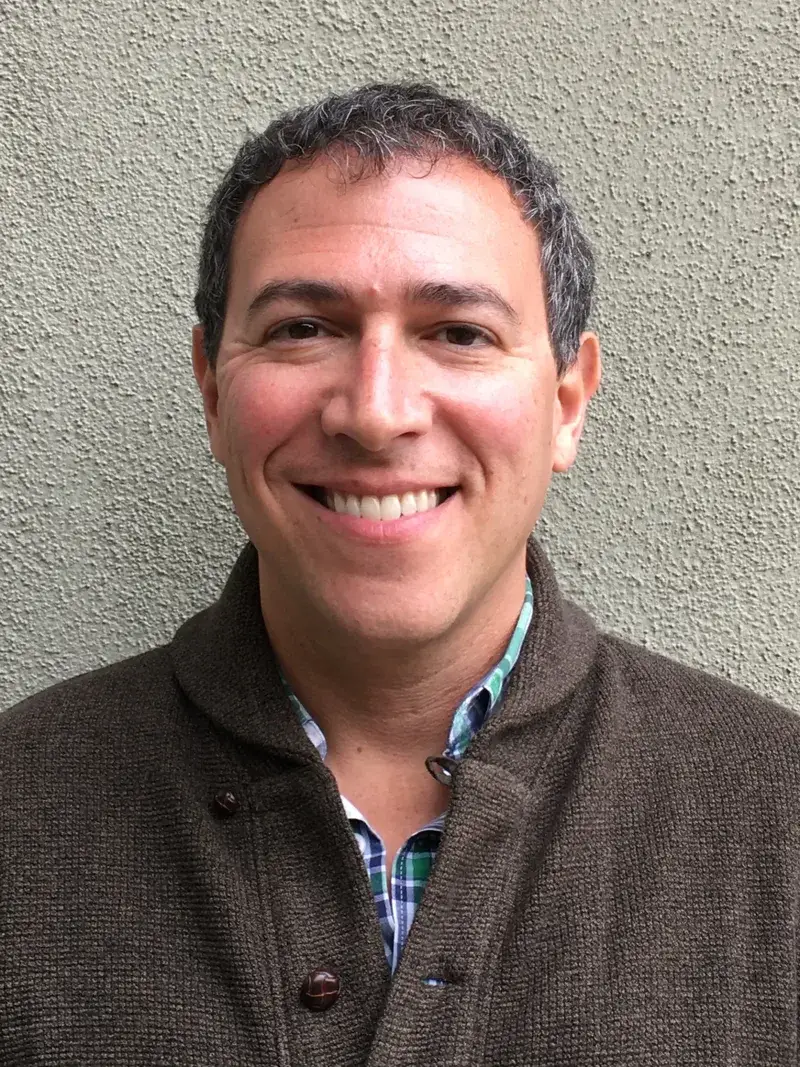
- Licensed Professional Clinical Counselor in California (MS, LPCC #423)
- I've lived with anxiety, panic, and OCD myself. The treatments I use are the ones that worked for me.
- Mindfulness-Based Cognitive Behavioral Therapy
- In-person, telehealth, or walk-and-talk sessions
In person, online, or walking
In my office. I'm in Los Feliz, at 4620 Hollywood Blvd, Los Angeles, CA 90027.
By video. I see clients by telehealth anywhere in California, including the Bay Area, San Diego, Orange County, and Sacramento. For social anxiety, video is often the easier way to start, and some of the practice happens in your real life anyway.
Walk and talk. Sitting across from someone and being looked at is, for a lot of people with social anxiety, the hardest part of therapy. Walking side by side around the Silver Lake Reservoir takes that off the table. It's a good place to begin.
Hours are Monday through Friday, 9 AM to 6 PM.
Fees
Sessions are 50 minutes and $250. I offer a sliding scale based on financial need, so if cost is the thing stopping you, ask me about it on the call.
Questions people ask before booking
Is social anxiety the same as being introverted or shy?
No. Introverts prefer less social stimulation and are fine with that. Shyness is discomfort that usually fades as you warm up. Social anxiety is fear of being judged that's strong enough to cause real distress or avoidance and that doesn't fade with familiarity. Plenty of extroverts have it.
Will I have to do things like public speaking in therapy?
Only if that's a goal you set, and only when you're ready. The practice part of treatment is built from your list, ordered from easiest to hardest, and you're in control of the pace. Nothing is sprung on you.
Can social anxiety be treated online?
Yes. Telehealth works well for social anxiety, and starting from home is often less intimidating. A lot of the practice happens in your own life between sessions regardless of where we meet.
How long does it take?
Many people see meaningful change within three to four months of weekly work. Longstanding, severe social anxiety can take longer. We'll set goals early and check progress against them.
Do I need medication?
Not necessarily. CBT is considered a first-line treatment for social anxiety and many people do well without medication. I'm not a prescriber; if I think it might help, I'll say so and can refer you.
Do you take insurance?
I'm a private-pay practice, which is what lets me keep a small caseload and offer a sliding scale. Many clients get part of the cost back through their plan's out-of-network benefits; I provide the paperwork for that each month, and I'm happy to walk you through it on the call.
Book a free 15-minute call
Pick a time below. We'll talk for 15 minutes about what's going on, and you can decide whether you'd like to keep going. No obligation. If a call feels like too much right now, email me at jeff@jeffreybornstein.com and we'll start there.
Prefer to call or email? (323) 362-6555 · jeff@jeffreybornstein.com